Wednesday, March 17, 2010

All change!

This is a revised version of a post which first appeared as Moving on in October 2007.

In January 2008 I handed over the reins of my first choir WorldSong to a new musical director after ten years at the helm.

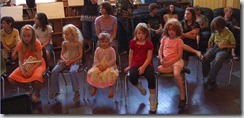
Woven Chords in action

This September – again after ten years – I will be handing over the leadership of Woven Chords. It’s time for a change.

but it’s always been like this!

As you probably realise by now, I am very sensitive to complacency and habit (see Breaking the habit of a lunchtime).

I am always on the lookout for different ways to do things, new challenges, ways of keeping people on their toes, possibilities for development and improvement, ways of raising the bar and stretching people (myself included).

Some people resist change and would be more than happy to continue doing the same thing week in, week out. Unfortunately, I’m the leader (of the gang, I am!) and if you sign up for my choir, you sign up to my vision and my way of working.

I really do believe that by constantly reviewing the way that I do things, finding new ways of approaching familiar material, having high expectations, taking people out of their comfort zone, etc. then individuals within the group improve their skills, the overall quality of the choir is better, and we constantly improve and move forwards.

The upshot of this philosophy is that there will come a time for me to hand over to someone else.

no leader is irreplaceable

Inevitably, any group of people working as a team with a ‘leader’ can come to believe that they can only do what they do because of the particular person leading them.

Obviously, the way that any particular group functions is highly influenced by the style and approach of their leader (conductor, director, coach – whatever). That person (if they’re any good) helps to mould and shape the group, and helps them to work as a team.

But I believe that there comes a point where that person should try to remove themselves from the picture, to make the group realise their own strengths and capabilities – strengths, talents and abilities that have now become independent of whoever happens to be leading them.

In fact, in terms of being a musical director and/ or teacher, I believe that my job is truly finished when I have succeeded in making myself redundant!

the time has come ...

Whenever there is a strong leader of a group or enterprise (artistic director of a theatre, conductor of an orchestra, curator of a gallery) it is very easy to think that any and all successes and achievements are down to that leader.

It may well be the case that a particularly strong individual leader can dramatically improve a group or project, but we must also realise that the individuals making up the group are also of vital importance and help to create the overall ‘flavour’. After all, if it weren’t for the members, then the enterprise wouldn’t exist at all!

I strongly believe that any such job should only be held for around five years, after which the leaders could perhaps rotate and move onto other similar organisations. Otherwise galleries or orchestras (or choirs) can become stale and too much a reflection of one particular individual’s vision.

So now it’s time for a big change, and the choir will move forward without me onto different (and hopefully bigger and better) things.

I am very sad to be moving on, and shall miss the choir and the individual members terribly. However, I am also very excited to see the choir grow in the future and to see what further delights are in store for all concerned. I won’t be completely disappearing however, and will stay in very close contact with both the choir and the new musical director. Here’s to the future!


Chris Rowbury's website: chrisrowbury.com


Sunday, March 14, 2010

It’s all arranged

This is a guest post by Jocelyn Lavin whose blog is 2nd Altos like the bottom parts. She writes here about what makes a good choral arrangement. Contact me if you’d like to submit a guest post.

guitar chord

“The mood is right; the spirit’s up;
We’re here tonight, and that’s enough.
Simply having a wonderful Christmas time.”

I’ll never forget the rehearsal in which we first sang my a cappella arrangement of this song. (If you can’t remember how the song goes, you can listen to it here.)

arranging Christmas

My band doesn’t do many concerts - the main reason we rehearse regularly is because we love it! But we do get quite a few Christmas gigs, and over the years our repertoire has gradually added just about every Christmas song there is. And a couple of years ago, I had a moment of inspiration that resulted in the arrangement of Wonderful Christmas Time.

(In case you’re wondering, the moment of inspiration was this: previously, we’d only ever been able to do a cappella songs involving our guitarist if he was singing the tune – he’s great when he’s on the tune, but has trouble singing any other parts. But I had the song in my head, and it suddenly occurred to me that he should be able to sing not just the tune, but also the bass notes in the intro ... because they’re all the same note, and there are no other notes happening at the same time to put him off! The arrangement fell into place easily from there.)

I was delighted that we had a rehearsal planned for the next day, so I didn’t have to wait long to hear my arrangement. (I can hear very well in my head or on the computer, but it’s not the same as actual people performing!) I handed out the music, and we sight-read it, and at the end there was a brief moment of silence, after which we all looked at each other and literally laughed in delight. That’s happened a few times since then, but that night was the first. So, why were we so delighted?

Well, partly it was because we’d successfully sight-read the song with very few mistakes - it wasn’t perfect, but it was close enough that we didn’t need to stop at any point, and no-one got lost. This is quite a satisfying thing to be able to do, and we were all well aware that not many groups would be able to manage it as well as we could, so we felt very accomplished (and, yes, rather smug).

However, I think that even vocal groups who don’t use sheet music would enjoy this arrangement (we’ve loved it every time we’ve sung it, even though it’s not been sight-reading since that first time), and I want to try to identify a few of the reasons why.

1. allocating the tune

I mentioned earlier that my guitarist can usually only cope with a cappella songs if he’s singing the tune, and indeed he does get the tune through most of this arrangement - but he doesn’t have it all the way through. We all get a bit of it too.

Off the top of my head, I can’t think of any enjoyable a cappella songs in which one part has the tune throughout - variety is important. (Personally I also tend to prefer arrangements in which the sopranos hardly get the tune at all, but that’s probably because I'm an alto and I’m subconsciously trying to redress the balance!)

2. backing vocal lyrics

Many a cappella arrangements of pop songs have the backing parts singing nonsense syllables, because they’re impersonating instruments. This can actually work very well if the arranger knows what they’re doing - these parts can be great fun to sing! But I think it’s even more fun if the nonsense syllables are occasionally replaced by actual lyrics.

You have to be careful, though - this only really works if either the music is homophonic at that point (i.e. the backing parts have the same words - at the same time - as the part that has the tune) or the tune is having a rest. Otherwise, the result tends to be that all the words get muddied together and none of them can be heard.

3. interesting chords

Of course, this is usually down to the composer rather than the arranger, but it can be very satisfying to sing a series of chords that aren’t just basic triads (i.e have only three notes in them). My band particularly likes major sevenths, and there are loads of them in this song! Interesting chords also tend to result in close harmonies, which are always fun if it's a good enough group of singers. (Close harmonies are hard!)

4. appropriate vocal range and tessitura

This is never an issue when I’m writing for my band, because we've sung together for many years and I know their voices quite well. But I’ve certainly sung arrangements that I haven’t enjoyed very much because the arranger seemed not to know about tessitura (see Chris’s post But I can’t sing that high! for more about tessitura).

The actual range of printed parts is usually fine - even if you’re a new arranger, it’s easy enough to find out (from books or the internet) about the appropriate vocal range for each part. (Sibelius, the most popular score-writing software, even colours the notes red automatically if you go outside the standard range.)

But range is only half of it - tessitura has to be considered as well. If you’ve never heard the word, it refers to the part of the range that's used most in a particular song. For example, a soprano part that includes a lot of middle Cs would be described as having a very low tessitura - sopranos can sing a middle C, but it’s towards the bottom of their range, and if they had to sing a whole song in which most of the notes were in that area, they’d be quite uncomfortable. Whereas I’m a 2nd alto, so I like to sing low notes... and any arrangement which involves my part being mostly an octave (or more) above middle C is not going to be one of my favourites.

5. balance

Considerations of range and tessitura go hand in hand with the question of balance. By ‘balance’, I mean: can the tune be heard clearly, and are all the other parts audible - matching each other if necessary - without drowning the tune? In a choir, balance will usually need to be fixed by the conductor regardless of what the arranger does, because it’s very rare that a choir has exactly the right number of people in every section. But the arranger can make this an impossible task if he/she is incompetent.

Choral arrangements tend to be based on the assumption that there will be roughly the same number of people on each part - if an arrangement doesn’t assume that, it won’t work if anyone tries to sing it with one person on each part (and you never know when that might happen!)

So you might think that there would be all sorts of problems caused by the fact that most choirs have far fewer tenors and basses than they do sopranos and altos. But actually, unless the numbers are stupidly uneven, the balance should be OK, because in general men can sing louder than women.

There are further tessitura-related aspects that the arranger needs to take into account, too. If the sopranos or tenors are singing high notes, they’re likely to drown everyone else unless the dynamics are carefully indicated (and often even then!) Conversely, if the altos or basses have the tune, everyone else will need to shut up. There’s more to it than this, but you get the idea!

6. dynamics

Lots of songs don’t have many different dynamics in them – they’re sort of “loudish” all the way through - but some dramatic variations in dynamics can make arrangements immediately much more interesting; Wonderful Christmas Time, for example, has lots of sudden (and slightly corny) diminuendos. Great fun!

7. easy to sing

Well, we don’t want it to be too easy (no sense of accomplishment!) but there are ways of avoiding unnecessary difficulty.

The main one involves making the leaps between consecutive notes in the harmony parts as small as possible, unless you have a good reason not to. It’s much easier for singers to work out the next note if it’s the same as the previous one, or only one step away. Inexperienced choral arrangers tend to be quite bad at remembering this!

For example, imagine that the backing parts are singing a C major chord: the bottom part is on C, the middle part is on E and the top part is on G. The next chord turns out to be A minor. That's not too hard - they could all move down, so that the bottom part is on A, the middle part is on C and the top part is on E. (They could move up to the A, C and E an octave higher, but that would be a much bigger leap and therefore much harder - and it would sound horrible as well!) But you’ll have noticed that two of the three notes are the same in both chords ... so why not keep the bottom part on the C and the middle part on the E, and just move the top part to A?

There might be reasons why you don’t want to do that - the most likely of these would be that the bottom part is the actual bass part and it has a surprisingly big effect on the music when the root of the chord (the A in this case) isn’t in the bass part - but your default strategy should always be to let the parts move to the nearest possible note wherever possible.

8. geography

This probably isn’t such a big issue in choirs that don’t use sheet music, but I bet it’s still an issue! When I’m rehearsing with my band, if a song falls apart, nine times out of ten it’s a geography issue.

My score of Wonderful Christmas Time has no repeats - you start singing at the beginning, you keep turning the pages, you reach the end. I’m willing to bet that if it had had any repeats, we wouldn’t have successfully sight-read it without stopping at the first attempt.

It’s very easy to forget, in the heat of the moment, which page (or section on a page) you need to turn back to, and if there are alternative words for verse 2, that’s even worse! (And don't get me started on music in which the words are written under verse 1, and all the other words are in a block at the bottom of the page. Argh!)

there you go

So, there you go. Eight factors that contribute to good choral arrangements. They're not intended to be in order of priority – they’re all important. Mind you, that’s not to say that a good arrangement has to have all these features - but if it doesn’t, the arranger will have a good reason why not. What I am saying is that all these factors need to be considered.

Of course, the choir could then go on to ruin a brilliant arrangement by singing out of tune ... but that’s another story!

Jocelyn Lavin, Vamp Till Ready 

Wednesday, March 10, 2010

What are rehearsals for exactly?

This is a revised version of a post which first appeared as Bad rehearsal = good concert? in December 2006.

There’s a strange thing that happens in choirs just as a concert is coming up. Everything that can go wrong does go wrong.

Benny_Goodman_rehearsal

Benny Goodman at rehearsal by Fred Palumbo

Then the concert that follows is usually excellent! What’s going on here?

bad rehearsal = good concert?

Very often, in the session the week before, or even sometimes in the rehearsal on the day of the concert, it appears that everyone in the choir has forgotten what songs they know, which parts they sing, and what they’re supposed to be doing. It’s as if some group amnesia has spread like a virus, as well as knocking the energy out of everyone.

Directing the choir in these situations is like climbing uphill through mud and always makes me despair, even though I know it’s just part of the process and everything will (probably) be all right on the night.

But that doesn’t stop me from despairing and wishing that I was somewhere else and really worrying if we’re ever going to pull the concert off. In fact, I even worry if people are ever going to remember how to sing again at all!

Then the concert arrives and (usually) everything goes swimmingly and we all forget the awful rehearsal the week before.

Afterwards, on a high and like a dog with a short memory, we start looking forward to the next concert and hope that everything will go smoothly, until that is, we get to the dreaded rehearsal the week before and it all happens again.

Then we remember: “Ah, yes, this is what happened last time”. But there is nothing we can do, and we despair again and we plod on again and we pray that it will all turn out fine. And it usually does.

what are rehearsals for?

This reminded me of something that a theatre director once said to me (I wish I could remember who it was):

“Rehearsals are the place where we find all the ways of getting it wrong. Then we’re just left with the right way of doing things.”

This seems to be the opposite of how most people view rehearsals.

It is common for people to get stressed and give themselves a hard time when they get something wrong in rehearsal. Their aim (presumably) is to get everything perfectly right, anything less is unacceptable.

But surely it’s in the concert that we want to get everything right, not the rehearsal?

That’s why the occasionally brilliant rehearsal always disturbs me slightly. Have we peaked too early? Will the concert be as good? How can we get any better than this?

In rehearsal we can actively choose to pursue all the ways of getting it ‘wrong’. (I’ve mentioned this in an earlier post Getting the best out of your choir 4: preparing for performance PART 1.) We can sing a song as if we are the worst choir in the world; we can sing a gentle ballad as a raucous rock and roll song; we can quieten our big, loud finale song down and sing it as a lullaby.

Once we’ve explored and played with a song in this way, singers tend to not be so precious about doing it the ‘right’ way. It’s as if some light and air has been let in and given people permission to experience the song anew.

And if a song goes belly-up and pear-shaped of its own accord, you just have to laugh, realise that you can now reject this ‘wrong’ way of doing it, and move on to try and discover yet more ways of getting it ‘wrong’.

what rehearsals can’t do

One thing that a rehearsal can never prepare you for is being in front of an audience.

You can’t practice this at home or in the rehearsal room. You have to have a live audience in front of you, but by then it’s too late. I’ve written about this in my post Can you ever prepare yourself for being in front of a live audience?.

how do you approach rehearsals?

How do you view rehearsals? Are they nerve-wracking experiences or a bit of fun and a laugh? Do you feel really bad when something goes ‘wrong’? How might rehearsals be improved so that the concert goes better?

I wish you many good and enjoyable rehearsal where you playfully discard all the ‘wrong’ things and end up with a cracking concert.

new way to comment

Those of you who subscribe to this blog by email or RSS feed often don’t leave comments because there’s no need for you to visit the blog’s website!

Well now there is any easier way to leave comments. At the bottom of each post that is emailed to you, you will see something like the following:

* Comments * Share on Facebook * Twit Me!

Just click on Comments and you will be taken to the comments section of the blog where you can leave your feedback.

You can also share the post on Facebook and send it to Twitter by clicking on the relevant link.


Chris Rowbury's website: chrisrowbury.com

Sunday, March 07, 2010

It’s hard to teach songs that people already know

I seem to be running lots of pop song workshops these days. But real love is for workshops where I can teach a lot of relatively simple songs so people can spend more time singing and less time learning.

kids singalong

But people keep asking for workshops to learn songs that they already know! And you’d think that would be easier – but it’s not.

Recently I ran a pop song workshop and it was hard work. We only got through three songs in six hours (with a break for lunch). That’s a lot of time, and not many songs. We didn’t even manage to learn the whole songs.

I could see people getting more tired and disillusioned as the day went on. After all, they’d come to sing simple pop songs – what’s the problem?

I was musing on this afterwards (in proper ‘reflective practice’ mode!) to see if I could improve things the next time I taught such a workshop.

Here’s what I came up with.

it’s hard to learn a song you already know

Most people are attracted to a Beatles or a Paul Simon or an ABBA workshop because they are already familiar with the songs. And there lies the problem.

In a harmony singing workshop this gives singers just two options:

  • sing the tune (a bit boring if that’s all you get to do all day), or
  • learn a harmony. Trouble is, it turns out that the harmonies are very hard to learn if you have the main tune fixed in your head – you keep reverting to it!

Yes, you can get the song up on its feet quickly because people are familiar with it, but as soon as you start working in detail, all sorts of problems arise. It’s not just the harmonies, but the lyrics and the rhythms prove difficult too.

You may well find that you’ve been singing the lyrics slightly wrong for years (the well-known ‘misheard lyrics’ syndrome). But now we have a room full of people who need to be singing the exact same words at the exact same time.

Then there are the tricky rhythms. Lots of pop song melodies use off beats. Most of us find off beats hard.

When we sing along to the record, we don’t notice that we’re slightly out with the timing because the lead singer is louder than us and getting it right.

But when we’re on our own, without the rest of the band, in a draughty church hall, it all begins to sound a bit dodgy.

I thought pop songs were easy!

Lots of people come to pop song workshops because they think the songs are straightforward. After all, it’s just disposable three minute pop fluff, not ‘serious’ music. Plus I can sing along in the car, so it can’t be that hard.

Yet the reason that classic pop songs stay with us and we enjoy hearing them again and again is that they are finely crafted pieces of work, often with surprises of harmony or rhythm. That’s what gives them their charm and makes them memorable.

As soon as we start to pick the songs apart in a workshop and strip them down to their basic components, we find out that most pop songs are very hard to sing!

At the very least we come away at the end of the day with a greater appreciation of the song writer’s talent, but it can be frustrating during the day as we struggle to make the song sound like it does on the record.

what do we mean by a ‘classic’ pop song?

Another disappointment for a punter can be that the songs that I’ve chosen for the workshop are not the ones they would have chosen. Everyone has their own list of favourites, which are usually different from their friends’ lists.

What I consider to be a ‘classic’ song might be unknown to another person or their least favourite song of all time. You can guarantee that for most people in the workshop, they won’t be learning what they’d hoped to learn!

I did a Beatles workshop once and planned to teach a great arrangement of John Lennon’s Across the Universe. Trouble is, nobody on the workshop had ever heard of it, even though it was one of my personal favourites.

let’s have a sing-along!

I offer a whole range of workshops: African, Eastern European, gospel, world music, sacred songs, and so on. For people to choose a particular workshop, they need to have some kind of reference point.

When people see ‘gospel’, they might think of Whoopi Goldberg in Sister Act. When they see ‘African’ they might remember that Ladysmith Black Mambazo once did the Heinz baked beans advert on TV. When they see ‘sacred’ it might bring back memories of boring church sermons when they were young.

And when they see ‘pop’ they feel young again and remember loads and loads of songs that they know and love. So they come to the workshop with huge expectations which can oh so easily be disappointed.

I reckon what most people who come to these workshops really want is to be in the band, or at least to sing along with them. Failing that, they’d like to sing along with a bunch of other people maybe with someone on the piano, or even a karaoke machine.

What most people don’t want to do is to put in the hard work to learn the harmonies and tricky bits (that are usually played on instruments any way). They want to be instantly in the groove of the song that they are very, very familiar with and which conjures up very specific memories for them.

That would be a sing-along workshop then. And there are lots of them. But it’s not what I – and many others – do.

it’s not just pop songs that are the problem

I teach unaccompanied harmony singing. It means you have to put a little bit of work in to get the songs sounding great. It often means choosing songs from cultures and genres that people aren’t perhaps familiar with, but I know from experience that when the songs are up on their feet, people usually love them.

But if it’s a pop song, it can be a big disappointment for all the reasons I’ve outlined above.

Actually, it’s not just pop songs, but any songs that people know well. It could be a bit of swing (Tuxedo Junction), some gospel (Oh Happy Day), hymns (Amazing Grace), folk songs (Blowin’ in the Wind). They all come with the same expectations and the same familiarity. And (unsurprisingly) they’re all in English.

To sum up: in my world, often the most satisfying and rewarding harmony singing workshops are those where people have never heard the songs before and are often in languages that they don’t know. We get through lots of songs, and we end up singing more than learning.

The workshops that are the hardest, cover less songs, and are least satisfying are those which deal with songs that people already know. And you end up doing more learning than singing.

a dilemma

From my perspective I’m faced with a dilemma.

If I offer a workshop people need to know about the songs I’m offering otherwise they won’t be interested. But if they’re familiar with the songs, we run into all the problems that I’ve outlined above.

If I offer an obscure foreign song workshop, people won’t come because they have no point of reference, but if they did, they would probably have a great time.

I guess it’s a marketing problem.

I’ve decided to take a risk and not offer my pop song workshops for the time being. If my work totally dries up I might have to have a rethink!

One option is to offer pop song workshops as more advanced singing workshops, not for the inexperienced.

what do you think?

I’d love to know what you think about my rambling rant. Have you had a disappointing experience at a singing workshop? Have your expectations not been met? Have you found familiar songs surprisingly difficult to learn in four part harmony? Why are you attracted to pop songs? What would attract you to an unfamiliar workshop?


Chris Rowbury's website: chrisrowbury.com

Wednesday, March 03, 2010

How songs are stored in your brain

This is a revised version of a post which first appeared as The singing memory in February 2007.

In How to deal with song lyrics 2 a few weeks back, I said that I believe that song lyrics are stored in a different part of the brain from, say, poetry, phone numbers or lines from a play.

brain

So how does the singing memory work? Where are songs stored in your brain?

time and memory

After only a short break from regular choir sessions, it’s as if people forget much of what they’ve learnt. Unlike riding a bicycle, just a short break from regular singing and it’s as if that part of the brain ‘forgets’ everything that it’s known. Even if we’ve been going over a song every week for the previous few weeks, just a short time off and the singing mind goes blank.

However, this only seems to affect short-term memory for songs.

Sometimes we really struggle with a song without ever quite getting it right. Then perhaps a year later – without re-visiting it at all in the meantime – we decide to sing it again and it comes out perfectly! There has been no extra practice or rehearsal or repetition. It’s lain dormant in the brain, and yet the subconscious seems to have been at work in that time.

having a break might help you remember

This phenomenon points to something about how the brain stores melodies and lyrics. A short break of just a week may have devastating effects, but a whole summer off and the choir often comes back sharp as nails.

Understanding this better might help us find more effective ways of teaching and learning songs.

After learning a new song for a few weeks, I get the choir to sing it through for a few more weeks. Then I leave it for a few weeks before we try it again in the belief that the subconscious has been squirreling it away more effectively in the memory.

how the brain remembers songs

There is definitely a different part of the brain involved in learning songs than that used to learn melodies for instruments or when learning ‘lines’ off by heart (e.g. poetry, plays, etc.).

Many times I can be asked what the lyrics to a song are and can only recall them by singing them. I can’t speak them or I’ll forget what’s coming next. The brain has stored the sounds and the words together, inextricably linked.

Similarly, when someone is struggling with a tune, often reminding them of the first few words is enough for the whole thing to kick in.

When singing a song we’ve not done for a while, I’m often convinced I don’t know the words (or the harmony). But I trust the process and just open my mouth and – as if by magic – the whole thing comes out almost despite me. There is even a conscious part of my brain that observes this process taking place and marvels at where the words and tune are coming from.

trust your own memory

Recently somebody asked for clarification of their harmony part so I sang it to them, believing that I knew it perfectly. Afterwards they said that they weren’t sure that’s exactly what I’d taught them originally. This sowed a doubt in my mind so I went to get the written score.

The second time I sang it, I realised that I had been absolutely spot on the first time! It was my subconscious brain that had remembered it. I just opened my mouth and trusted what came out. But as soon as someone asked me a question, my rational brain kicked in and I began to doubt myself.

I often see people singing hesitantly because their conscious mind is telling them that it’s not sure that they know what they’re doing. However, nine times out of 10 they’ve got it right, if only they’d trust themselves and the learning process.

At times like that I tell people to behave as if they know what they're doing and invariably it will come out right.

what can we learn from this?

Of course, everything I’ve written about here is anecdotal. I have no idea if there is any scientific evidence backing it up. But what I’ve learnt is this:

  • leaving a song alone for quite a while allows the brain to consolidate its learning in peace. You might want to build in gaps like this when teaching or learning new songs.
  • it’s no good drilling extra verses at home like you would when learning lines. You need to link the music with the lyrics. Better is to sing along with a recording whilst looking at the lyrics, then gradually hide them as you repeat the process.
  • you know songs better than you think. If you’ve not sung a song for a while, don’t panic and get the music or lyrics out, just trust the process and you will be amazed at what your subconscious mind has remembered.
  • don’t panic when you’re in the early stages of learning a song. If you learn a song quickly, you will forget it quickly. If you have a break from singing too soon in the process, you will forget the song quite easily. But it WILL come back. Just be patient.
     

do you have any handy hints?

Do you have any personal experiences you want to share about learning songs and lyrics? Do you have any handy hints that might make the lyric-learning process easier? Do drop by and leave a comment!


Chris Rowbury's website: chrisrowbury.com

Sunday, February 28, 2010

Is all choral music religious?

Question2 This post is part of a series of occasional Questions and Answers. Just use the contact form if you want to submit a question.

Shama is from Bangladesh. She loves choral singing, but wonders if all choral music is religious.

Shama writes:

“I love singing and have been singing since I was 9. Although I started out with learning Bengali classical music, I have also been really interested in English music. I love listening to choral music.

But such opportunities are not available in our country, as far as I know. I really do not have much knowledge about choirs. I was hoping you can tell me about the significance of religion in choral music.

Church choir groups exist all over the world, including our country. But I think they would be reluctant to let me join them, as I am from a different religion. My parents will be negative about it too.

Do choirs always have to be religious? Are there choir groups who do not focus on the religious side of the music, but only on the beauty of it? If not in our country, hopefully in other countries?”

choir? choral music?

Not trying to be difficult here, but it depends on what we mean by ‘choir’ and ‘choral music’!

By ‘choir’ I mean a group of singers who come together on a regular basis to learn and perform songs in a formal or semi-formal way. Most choirs sing in four-part harmony with or without musical accompaniment.

Wikipedia defines ‘choir’ as:

“a body of singers who perform together. The […] term is very often applied to groups affiliated with a church (whether or not they actually occupy the quire) …”

The connection with churches is reinforced by the other meaning of the word ‘choir’:

“Architecturally, the choir (alt. spelling quire) is the area of a church or cathedral, usually in the western part of the chancel between the nave and the sanctuary (which houses the altar).”

However, the notion of the ‘chorus’ is pre-Christian and goes back to ancient Greek drama. The oldest unambiguously choral repertory that survives dates from 200 years BCE.

harmony singing and polyphony

There are many groups of singers throughout the world who sing regularly, but without the formality of a choir. In such cultures there is no separation between singer/ performer and audience. Everyone sings and everyone joins in. Children learn the songs from a very early age so there tends not to be any kind of formal training.

If you accept that a choir sings in harmony, then that immediately rules out the traditional music of many cultures. Asian cultures, for example, tend not to have a harmony singing tradition, whereas Eastern European cultures have a strong harmony tradition going back thousands of years.

I’ve written on the subject of harmony singing traditions in Why don’t you sing songs from India?

In the West, the term ‘choral music’ has come to mean music that is written down, has been composed by a known composer, is often ‘classical’, and is very often Christian church music.

But there are many ‘choirs’ who sing ‘choral music’ that doesn’t fit this tradition.

the role of the Christian church

I’m not an expert in this area by any means, so please take this as a very rough guide!

Harmony singing in the Christian church goes back to the 14th century in Western Europe. During the Renaissance, sacred choral music was the principal type of formally-notated music in Western Europe. It is still a very strong influence in the Catholic church and the Russian Orthodox church, as well as the hymn singing tradition of the Anglican church.

When the West began to colonise other countries, they took their religion and their music with them. This meant that harmony singing was introduced to cultures that had no such tradition.

Countries such as New Zealand and South Africa embraced this new musical style with gusto and incorporated it into their own singing traditions. The legacy of this is the rich harmony traditions of Maori songs and South African church singing.

Although originally the Christian missionaries would have taught religious songs to these cultures, the harmony techniques have also been applied to folk songs and other non-religious music.

do choirs have to be religious?

The short answer is “No”.

If you like Western classical music, there is a lot of religious repertoire, but also a great deal of non-religious material.

If you like traditional and folk music, there are many cultures throughout the world which have strong, non-religious harmony singing traditions.

There are choirs throughout the world with are based in churches, but also many, many choirs which have no religious affiliation at all (in fact, I know of several choirs which completely ban any kind of religious music!), but which are based in the community that they serve.

I don’t know about Bangladesh I’m afraid, but I’m sure if you look hard enough you will find a non-religious choir.

can I sing religious songs if I’m not religious?

Some people have very strong objections to singing songs from religions other than their own. Some people who are atheists or agnostics refuse to sing any songs that have any religious overtones at all.

I don’t have a religious bone in my body, but I absolutely LOVE gospel music, Russian church music, shape note songs, South African church songs, Jewish Niggunim, etc. etc. Does that mean I can’t sing them?

I’ve written about secular vs. religious songs in The devil doesn’t always have the best songs!

As long as I respect the tradition that a song comes from, and as long as I’m not singing anything overtly religious (personally I draw the line at singing about Jesus, but I’m happy to sing about the Lord or the Spirit), I continue to sing and share beautiful music. After all, the music was created by human beings and is a celebration of our inner spirit whether you are religious or not.

There is a very interesting discussion on ChoralNet about a pagan woman who asks if she can be a choral conductor. She believes that:

“no matter how PC or multicultural people try to make it – there are no SATB choirs anywhere in the world outside of the Christian tradition that created it.”

I’m not sure that I totally agree with that, but it has sparked off an interesting discussion about whether you need to believe in what you’re singing or conducting.


Chris Rowbury's website: chrisrowbury.com

Wednesday, February 24, 2010

Not everyone experiences a concert in the same way

This is a revised version of a post which first appeared as How was it for you? in March 2007. 

Just because you as a singer have a great time in a concert doesn’t mean it went well.

happy audience

Happy audience by Ekke Vasli

Just because you as a choral director felt the rehearsal went much better than the actual performance doesn’t mean the concert was bad.

Just because you as an audience member thought it was wonderful doesn’t mean that the singers enjoyed the experience.

Not everybody experiences a performance in the same way.

a typical concert

Woven Chords often perform at their ‘home’ venue in the beautiful Georgian ballroom of Stamford Arts Centre in Lincolnshire. The room is gorgeous and has featured in many costume drama films. Beautiful surroundings complete with chandeliers and a wonderful acoustic – what more could you ask for?

We often muster a choir of at least 60 singers and a capacity audience of 120 or so. There are no stage lights in the ballroom so we can see the whites of the audience’s eyes! It feels very intimate and cosy.

The acoustics are great, the choir relaxed and on form, the audience with us, and everyone has a great time.

Except me.

Well, that’s not strictly true, I do usually have a really good time, but not a great time.

who needs to have a good time?

Of course, in the end, it doesn’t matter whether I have a good time or not. As long as the choir enjoy themselves and the audience has a good evening out and our standards remain high. It doesn’t matter what I’m feeling.

It is strange though how unpredictable my experience is.

I have had absolutely amazing, fantastic gigs where everyone has been firing on all cylinders, the audience have been fantastic and we all had a great time.

I have also had bad gigs where I’ve just not been in the mood, nothing seems to go right, and the choir don’t ever really gel.

We prepare the same each time, we put the work in, we don’t get complacent, and yet it is impossible to predict how we (as singers and choir leaders) will feel during the performance.

how can we gauge a performance?

Which reminds me of my days as a performer on the wilder fringes of the theatre world.

I could be totally prepared and really looking forward to a show, only to have a really bad time and end up feeling that the show had been rubbish that night. Yet afterwards in the bar audience members would tell me how fantastic it was, and other cast members would say they thought it was one of our best shows.

Then the other way round: I could feel that I was really flying, had never performed better, the connection between the performers would be electric, we’d never done the show so well, it was a triumph!! Only to come off stage to find a relatively empty bar, a lukewarm audience reception and fellow cast members drowning their sorrows in their beer and vowing to give up acting immediately.

It’s not so simple then. Even performers in exactly the same show can have completely different experiences.

nobody cares how you feel!

I came to the conclusion that it is actually irrelevant how you feel about a performance. All you can do is be prepared and do your best, then it is simply up to the audience to take it or leave it.

As far as singing concerts go, there are several other factors involved.

We always rehearse on the afternoon of the concert, so maybe I’m just too tired to enjoy the evening as fully as I might. Sometimes we have a cracking rehearsal, everyone’s relaxed, we have a bit of a laugh and the singing is wonderful. But come the evening and the nerves kick in (and they can see the audience in all their glory!) and perhaps the songs are not quite as good as they had been that afternoon. That just goes to show that we shouldn’t have expectations: be in the moment, the show will be what the show will be.

then there’s the audience

As a performer (and now a conductor) I am badly affected by an audience’s response (see last week’s post How audiences behave and how we respond).

We all want to be loved by the audience, we want to please them, we want them to think we’re the best thing they’ve ever heard, we want to see happy smiling faces lapping up every moment.

And often that is what happens, but there will always be a few audience members who are looking a bit tired or bored or both (even though they may be having the time of their life) and they are the only audience members I see and I start to think “They’re not enjoying it. They don’t like me. I’m not doing very well. I should give up and buy a shop”.

Then I start to doubt myself and perhaps the next song is a bit wobbly because I’ve taken my eye off the ball, which then spooks me a bit, which then means I might make a bigger mistake in the next song and so on. And all because perhaps a single audience member is not smiling enough!

choir leaders can’t see audience reactions

After one concert lots of choir members mentioned how smiley the audience had been. I was beginning to wonder whether we had been playing to the same audience when I realised that the choir see a different audience to the one that I do.

Why hadn’t I realised this before! When we are singing and the audience is smiling and enjoying themselves, I have my back to them and simply don’t see. Then when I turn round to announce the next song (or engage them with some so-called witty banter) they become serious because they’re concentrating and listening intently to what I’m telling them about some obscure Eastern European song about a red fez or handkerchief in a puddle.

So I’ve decided to commission a pair of wing mirrors like the ones the moods used to have on their scooters. I’ll put one on each shoulder, then whilst I’m conducting I can glance in the mirror to see the rapturous, smiling faces of the audience having the best time of their lives!


Chris Rowbury's website: chrisrowbury.com

Sunday, February 21, 2010

What kind of feedback do you want?

I’ve been talking quite a lot recently about feedback – from singers and choir leaders and from audiences. But not all feedback is equal.

Feedback can come in many forms: speech, writing, applause, by email, face to face, and so on. Sometimes one form is more useful than another.

gorilla clapping

But will you get the feedback you want? As Dr. Gregory House says in the TV series House: “Everybody lies”. Can you trust people’s responses? And are you even asking the right questions?

types of feedback

  • spoken in the moment – this can be the best kind of feedback as it’s right there, in the moment. But it can be inappropriate for someone to interrupt the proceedings. It might be better to ask people to feedback at the end of what you’re doing so things don’t get too disrupted.
     
  • spoken after the event – this can be audience members coming up to you in the bar after a concert, or a singer grabbing you at choir at the end of a session. If the gap between the event and the feedback is too long though, it might be harder to respond  properly.
     
  • overheard conversations – this is the kind of feedback that is not intended for your ears, but might be most valuable because of that! Sometimes people find it hard to be honest to your face, so this might be a way of getting to the truth.
     
  • second-hand reports – this amounts to gossip and should be taken with a pinch of salt. It’s always coloured by the feelings and motivation of the person relaying the feedback. However, it’s sometimes useful to have a ‘friend’ in the choir or audience who can feedback to you what people around them have been saying. This is similar to overheard conversations.
     
  • written down at your request – you might have a comments book at the end of a workshop or a concert, or you might give out a questionnaire to your choir, or the teacher might hand out a feedback form. This can often be open, but sometimes contains specific questions for you to answer.
     
  • unsolicited writing – if people feel strongly enough about something (they liked the concert a lot; they loved the workshop; they hate the way you deal with the altos), they might write to you without being asked. In this day and age it’s most often as an email. Try to keep these in perspective as they usually only represent one person’s view, and often come from the most outspoken, confident people as opposed to the silent majority.
     
  • applause – the most common form of feedback at concerts and sometimes workshops (including whoops and hollers and stamping feet!). This makes everyone feel GREAT! It’s instant, clear and in the moment. You know that you’ve done well.
     
  • getting it right – another instant form of feedback is when you’ve nailed a song or a tricky passage, either as singer or choir leader. You just know it’s gone well, but you’ll also usually be greeted with grins and smiles.
     
  • other feedback – I’m sure I’ve missed some out. Do let me know if you have other examples of feedback.
     

which is the best kind?

You might have a personal preference for certain kinds of feedback.

Personally I’d much rather write to someone than face them if I have a criticism! I’m happy to receive feedback in any form, but as a teacher and choir leader, seeing people happy and enjoying themselves is the best. Frowns and sideways glances is the worst!

You may decide that certain kinds of feedback are better suited to particular circumstances. Asking questions while being taught a song might not be best. Better to leave it until the end. Comments forms are good at the end of workshops, but some people don’t like writing in public or have to rush off, so make sure you’re contactable by other means.

Not every kind of feedback suits everyone, so make sure there are always alternatives available.

Not all feedback is equal. Gossip is probably less accurate than face to face feedback. Although people don’t always tell the truth!

everybody lies!

A cynical view at best, but there is some truth in this.

Often people want to please you or give you the answer that they think you want. Other times people want to be polite and not tell you what they really think. So take all feedback with a little pinch of salt. Unless of course everybody is saying the same thing!

Other times people might not know what they want, or maybe think they want one thing, but really want another.

I give out questionnaires to my choir every couple of years or so. The main questions are about repertoire: what is your favourite song? which songs do you like singing the least?

I used to ask things like: what is your favourite thing in our weekly sessions? Can you think of any interesting challenges for the choir? Are there types of songs that we don’t do that you think should be included? Is the warm up too long?

I quickly discovered that there are as many answers as there are choir members! It is very rare to find consensus on any one thing. It made me realise that a choir is a group of people who all agree to sign up to one person’s vision: the choir leader. It’s rather like a benign dictatorship.

The other thing that I discovered is that people may say one thing, but actually think or feel another. Many times in the questionnaires people asked for more songs in English and more contemporary pop songs. So I included a few in our repertoire.

When the next questionnaire came round, it turned out that the most popular songs were always the foreign language ones, and the songs that were least liked were the pop songs!

asking the right question

To get the right feedback you need to ask the right question.

In Indian culture people often want to please. When I was travelling in India I would sometimes ask people if this was the right road to get where I wanted to go. They would always say “Yes!” because they wanted to please me. It was seldom the right road.

I soon learnt that the better question would be “Which road do I need to take?” and they would point out the correct road.

You might ask the choir if everything is OK when you see them frowning. They might answer “Yes” because the state of being lost and confused is normal, so everything IS OK. Might be better to ask “How can I make it easier for you to learn this tricky bit?”

You might ask the audience if they enjoyed the evening. They might say “Yes” and you think that means the concert was good. But maybe they didn’t like most of the songs, but they had a great time catching up with their friends an admiring the acoustics.

You might ask your choir leader if the second half of the song is the same as the first, and she says “Yes”. She means that the tune is the same, but you were asking about the lyrics and the harmony parts coming in.

to wrap it all up

We all need feedback. In our lives and in our work. But there are many different kinds, many appropriate contexts, and we can’t always believe what we hear.

Many actors say they don’t read their reviews because they get too affected by the bad ones. But they don’t read the good ones either. It’s all subjective and it’s all too easy to be swayed and have our inner negative thoughts or big ego awoken.

So take feedback lightly. Don’t focus on the one negative comment in your choir of 60 singers, but also don’t think you’re wonderful just because you get an encore at your next concert.

Keep it all in balance, but do keep trying to do it better and continue to ask for feedback. Otherwise you will become complacent.

feedback please!

What do you think of this post? Was it of interest? Do you disagree with anything? Do you have anything to add? Drop by and leave a comment. I’ll be very grateful!


Chris Rowbury's website: chrisrowbury.com

Wednesday, February 17, 2010

How audiences behave and how we respond

This is a revised version of a post which first appeared as How audiences affect us in December 2006.

I recently wrote about the importance of feedback when teaching and learning songs. In the absence of feedback, our most negative thoughts can raise their ugly heads.

Bored audience

Bored audience by artfulblogger

It’s the same with performance. If an audience is unresponsive, we can start to believe that we’re not performing very well.

audience behaviour

Audience dynamics are a very strange thing. Sometimes it’s as if you’re performing to the living dead, and yet afterwards you might have loads of people coming up to you saying how wonderful the concert was.

At other times the audience is far more animated and full of smiling faces, and yet there is hardly any feedback when the concert is over.

But however the audience respond, the first few moments of a concert tend to set the mood for the rest of the night.

At one Woven Chords concert we had around 60 singers so it took a while to get on stage. Usually people start clapping as soon as we enter, then it wanes a bit as they realise how many of us there are! But this time we entered in complete silence. There were around 120 people in the audience and you could have heard a pin drop.

I decided to make a joke of it and tiptoed from one side of the choir to the other asking in a loud stage whisper if the singers were OK. Gradually the audience began to laugh and warm to us, and when the final singer took their place, the whole audience applauded loudly.

It was a great concert – one of our best – but the audience was very unresponsive and sleepy throughout. The main reason was that the heating was oppressive. This was putting the audience to sleep and over-heating the singers on stage.

Despite this, we had loud encore calls, and the whole audience joined in with some songs at the end.

We once played to an elderly audience who were having their harvest supper. Unfortunately we were on after the meal. Not only did the venue stink of cabbage, but pretty much everyone in the audience nodded off during the concert!

Quite often our venues are churches. In the early days of WorldSong, we played in a church where there was no applause at all. This was very unexpected and completely threw us.

I realised that perhaps the audience weren’t used to seeing concerts in churches, so without trying to fish for applause, I did point out that clapping was allowed, and from then on the concert went with a swing!

how we react to an unresponsive audience

I suppose with confidence and experience it is possible not to be affected by an audience’s response, but it still gets to me after over 25 years as a performer.

There I am up on stage trying my hardest and enjoying myself, but I only have to catch the eye of a seemingly disinterested or bored-looking audience member and all the doubts start creeping in: maybe they don’t like me; perhaps I’m not performing very well; it’s not their taste and there’s another hour and a half to go! etc. etc.

Of course, as a choir leader I have my back to the audience most of the time, but I do try to get them on my side with a bit of banter between songs and it sometimes feels like I’m a stand-up comic who’s dying! Usually, of course, it is our own internal critics talking and the audience are actually having a great time.

Once we did a wedding an sang Ladysmith Black Mambazo’s version of Amazing Grace. I was having such a great time conducting and was dancing around and joining in.

Afterwards the choir told me that if looks could kill, I would have been dead by then! Apparently pretty much the whole congregation – who had been expecting the well-known version of the song – looked daggers at the choir and were sour-faced throughout. Luckily I had my back to them!

It is very hard to keep positive and perform well when you are faced with a sea of blank, bored-looking faces. Sometimes you might spot and audience member who has dropped off to sleep. Once the whole of the front row grimaced as one (like they were sucking lemons) because they didn’t appreciate the finer points of clashing Georgian harmonies.

It’s easier said than done, but in many ways we have to sing for ourselves in a concert. We’ve done the preparation, we’re there because we love to sing, we’re all dressed up in our finery and look impressive. It’s just an added bonus if the audience like what we’re doing. WE like it, and that’s perhaps what counts the most.

So remember:

  • you can’t please all the people all the time – some audiences won’t like what you do
  • it’s not always your fault – it can be too hot, too late, too loud, too close to supper
  • things aren’t always as they appear – just because someone looks a bit glum, doesn’t mean they’re not enjoying themselves
  • people show their pleasure in different ways – some people shut their eyes, some frown in concentration, some come up to you afterwards and congratulate you, some will email you the next day, some will clap loudly, but only at the very end of the concert
  • the most important thing is to have faith in your preparation and enjoy the singing – that joy and confidence will carry across to your audience
     

what do you do?

What kind of audience member are you? Do you smile all the time or frown in concentration? Do you whoop loudly at the end or clap politely? Are you the sort of audience member you’d like to have at one of your concerts?

How do you respond to a sea of blank faces? Do audiences affect how you perform? What kind of feedback do you want from an audience? Do you have any concert stories to tell?


Chris Rowbury's website: chrisrowbury.com

Sunday, February 14, 2010

Why feedback is important when teaching and learning songs

I was running a one-day workshop a while back and it seemed to me that the whole thing wasn’t gelling. People seemed uninspired, energy was low, and it was taking ages for people to pick up the songs.

thumbs down

Thumbs down by goldberg

I reckoned it was just one of those days and I would put it down to experience. But at the end, loads of people came up, full of praise for what a great time they’d had and how much they’d enjoyed the workshop.

I’d misinterpreted their response. But in the absence of clear feedback, that’s all I’d been able to do.

no news is bad news

There has been a distinct lack of comment on this blog lately. I’m beginning to think everyone has stopped reading it!

If we don’t get any feedback, the majority of us fill this vacuum with all our doubts, insecurities and fears. Maybe you don’t like what I’m writing. Maybe the comments section is not working properly. Maybe the RSS feed is just not getting through. Maybe nobody is reading my blog!

It’s the same with choirs and workshops. Singers need to be given feedback or they won’t know how well they’re doing. Choir and workshop leaders need to know if they’re getting their message across.

In the absence of feedback, we all fear the worst: that we’re bad singers or bad teachers.

the teacher teaching

How is it going? Am I going too fast? Do I need to explain things better?

People being what they are, I often teach to a sea of fairly blank faces. Brits are famous for not showing their feelings! Also people tend to glaze over when they’re concentrating. How do I know if I’m teaching well? As a teacher, I need some feedback from those I’m teaching.

Sometimes I ask directly for feedback. How’s it going? Am I making sense? How can I help you with this tricky bit? But I often don’t get a response.

People being what they are, most of us don’t like to speak up in front of our peers.

I remember being at university and not really understanding what the lecturer was saying. I put it down to my own stupidity. But I had a friend who wasn’t afraid to ask “Could you go over that again please? I don’t think I understood it.” There would be an audible sigh of relief. We’d all been thinking the same thing, but had been to afraid to ask.

Giving feedback and asking questions can take courage. But it’s always best to speak out or you just won’t learn. There’s a very good chance that everyone else is in the same boat.

But even if they’re not, clarifying a point for you will help you learn better. It also tells me that you’re paying attention to my teaching!

the singer learning

How am I doing so far? Am I getting it right? Is it better than last time?

I’m trying my best and it seems to be going OK, but I’m not sure I’ve got it right or if I’m doing what my director wants. As a singer I need constant feedback to let me know that I’m OK and on the right track.

Often teachers and choir leaders forget to give clear feedback to the singers. Especially if everything is going smoothly. If a song is being learnt well, at just the right pace, it can easily be taken for granted. But singers need to be told that we’re doing well. It gives us confidence and a clear indication of when things are going right.

I also need feedback if things are not going too well, but are a definite improvement on last time. This says to me that I’m on the right track and should keep on going.

And when things aren’t going well, I need just the right kind of feedback in order to help me get over the difficulty. I need to understand what is required in a clear, unambiguous way.

things to remember

  • choir leaders can’t read minds – if you have a problem or don’t understand, then say something. A sea of frowns and sideways glances can destroy a leader’s confidence.
  • speak up if something’s not clear – this may take a bit of courage, but you’re probably not the only one, and at least you will nail the point for yourself.
  • feedback is important when things are going well – don’t fall into the trap of only giving feedback when thing’s aren’t right. Singers need to be encouraged and praised when they get it right.
  • there can never be enough feedback – teaching and learning is a dialogue. You can’t ever have too much feedback. Fill the vacuum with clarity rather than doubts.
  • singers can’t read minds – the only way that a singer knows she has interpreted your instructions correctly is if you tell her!
     

useful types of feedback

As a choir leader or workshop leader, what kinds of feedback do you find most useful?

As a singer, how can the teacher or choir leader help you best? What kind of feedback works for you?

Do drop by and leave a comment. At least then I’ll know that somebody is reading!!


Chris Rowbury's website: chrisrowbury.com

Wednesday, February 10, 2010

How to deal with song lyrics 2

This is part 2 of a revised version of two posts which first appeared as The writing’s on the wall and Words are flowing out like endless rain ... in January 2007.

Last week I looked at how and when you might begin to introduce the lyrics of a song; whether the words should be written down or drilled by ear; the tyranny of pieces of paper in the hand; how associations made when learning a song can become a trap; when to take written lyrics away; and how to make sure the last lines in each verse are rehearsed as much as the first few lines.

Foreign lyrics

This week I want to continue to look at how we deal with lyrics in songs.

foreign vs. English words

Foreign lyrics can seem daunting at first, but once people get used to seeing strange syllables, they don’t pose too much of a problem. In fact, foreign lyrics can be easier to learn than English ones!

If a language is unknown, there is no alternative but to learn the lyrics syllable by syllable. But if you know a language well (like English) or are somewhat familiar with it (French, Spanish, etc.) it can a make life more difficult.

When you learn English words, you internalise the meaning as you go. When you come to sing it, you may remember the rough meaning, but not the exact words. So you paraphrase, substituting your own words for the proper lyrics. The problem is, not everyone does this in the same way, and your words might not even fit the tune!

With foreign words, even if you know the meaning of the song, you can’t simply make up your own version. You are much more likely to accurately remember each syllable.

It may be hard at first, but you have to make sure that the foreign words don’t slow you down. This can be a problem if the words are written down. The whole song can slow down as you stumble over the strange lyrics.

A classic example of this is when Woven Chords sing the Polish Christmas song Lulajze Jezuniu. We spent some time learning the song using the words of the first verse and the chorus is the same each time. When we come to the second verse in performance, everything slows down and gets much quieter until we get to the familiar chorus when it all picks up again!

The secret is to soldier on regardless. When you’re learning you will stumble over the odd syllable here and there, but just gloss over it and keep the same speed and energy up so that the song flows. Eventually you will make the correction as the words become more familiar.

there will always be an audience member who understands

My experience is that there will always be at least one audience member fluent in one of the foreign languages that you sing at a concert. You need to respect the foreign words and find a way of bringing life to them and pronouncing them as accurately as you can.

This is why I will never teach a foreign song that has been passed down by ear without finding and checking the original lyrics. It would be an insult to the culture that the song comes from.

If you get your choir to behave as if every word they sing is going to be understood by at least one audience member, it will lift the whole performance.

We have had a Japanese woman in tears as we sang in Japanese about cherry blossom; two young Bulgarian women who joined in with a song that they didn’t know, but picked up the words quickly; a person who heard one of our CDs and assumed that we came from the countries where the songs came from!

beyond the first verse

When I begin to teach a song, I usually use the words to the first verse when teaching the tune and harmonies. We often spend a few weeks on this until it’s locked into the brain properly.

But then we realise there are loads more verses to learn – and most often in a strange foreign language! These are always much harder to learn than the first verse. (This is the same problem that I mentioned last week in individual verses where we always end up singing the first lines more than the last lines.)

In subsequent verses the syllables often fit into the tune in a different way, sometimes the rhythm is even slightly different. No matter how often we sing the other verses, we never seem to nail them as well as we did the first verse.

After Verse 1, people are just reading off the page and trying to fit words to a tune in a fairly abstract way rather than learning tune and lyrics together as we did in the first verse. If I ask people to go home and learn the words, it’s with a different part of their brain so it never seems to flow as well as Verse 1.

I’ve tried teaching new songs line by line (with all the harmonies), and doing the first line of every verse before we move onto line two. The trouble with this is that we never seem to get an overall picture of the whole song, and it ends up being bitty and also a bit of an overload to deal with so many foreign words.

I’ve tried moving straight onto Verse 2 as soon as we’re beginning to master Verse 1, but that somehow seems to push all knowledge of Verse 1 out of people’s brains in order to make sense of Verse 2! I’ve even resorted to adding one new verse each year – which does seem to work, but takes a very long time to finish the song!

I have yet to find a solution to this, so any advice will be greatly appreciated!

making changes later on

After a song has bedded in for a long time, what happens when we try to change lyrics or add new verses?

Because of the problems of learning verses beyond Verse 1, I often chicken out and just sing the first verse in performance. After a few concerts, this becomes limiting. It’s a lovely song and we want to repeat it more often. Also there may be people in the audience who understand the language and want to hear the rest of the story!

But now that we have repeated the song so many times with the same words, it is very, very difficult to add new lyrics.

One way to help this might be to change the arrangement at the same time so that the whole song is refreshed.

how to stop singers using lyrics in performance?

Some people will always find it difficult to commit lyrics to memory – foreign or English. Of course, it is much, much better if singers aren’t referring to lyric sheets in concerts, but how do we police this?

One option (probably used in professional choirs) is to say that if a singer hasn’t learnt the words, then they don’t sing in a concert. This seems a bit draconian for a community choir though!

Apart from impressing upon the choir the importance of learning the lyrics, how does one insist? What sanctions can one use?

This is a problem that I’ve not found a solution to. Again, any useful suggestions gratefully received!

the lyrical memory

How and where are song lyrics stored in the brain? I believe that it is a very different mechanism from that used to rote learn poetry, phone numbers, lines in a play, etc. That’s the subject for a later post from the archives.


Chris Rowbury's website: chrisrowbury.com

Sunday, February 07, 2010

Auditioned choir or not?

QuestionThis post is part of a series of occasional Questions and Answers. Just use the contact form if you want to submit a question.

Nat started his choir four years ago. He’s slowly built the numbers up to a fairly stable 35 or so, but thinks it’s time for a change.

If he auditions, does it mean that he will be going against the inclusive nature of most community choirs?

He says:   

“I am no longer willing to work with people who don't  come to choir regularly. Also, many people want to join the choir, but I felt for a long time it was getting too big – now I would like to open the doors and am considering auditioning – this goes against my philosophy though.

My philosophy of singing and of music is similar to the philosophy described on the Natural Voice website – I don't want to deprive anyone of the chance to be part of a community and experience the strength and communicative power of their voice and harmony singing.

Still, we have worked a lot to get where we are and some of my singers get frustrated when I take the learning pace down 80% to accommodate inexperienced singers. So I'm considering auditioning.

I've already turned down 2-3 singers who had difficulty carrying a tune even without a second or third part. On the other hand I have seen progress that I never would have expected could be possible with some singers who had difficulties in the beginning.

So – I was hoping you could give me some advice, based on your experience. I will be making some decisions very soon – I would be thankful for any words of wisdom!!”

life is not perfect!

Not everyone will come to choir regularly. Life has a habit of intervening: people have families and other commitments. Only professionals can be guaranteed to turn up. And even then sometimes they bunk off!

Do you charge by the session or in blocks? I’ve always found that charging up front for a block of sessions focuses the mind wonderfully when it’s a cold, rainy night. People will tend to make more of an effort as they’ve already paid good money.

The bigger the choir, the easier it is to adapt to a few singers being absent in any given week. I used to run a women’s ensemble with 12 singers and if just one person was away, then it threw a spanner in the works.

Create a system whereby if someone can’t attend a session, part of the deal is that they must catch up in their own time. They can get the music or a parts CD from you, or get a friend to record the session. Put the responsibility back onto the singers.

can auditioned choirs still be ‘open’?

I’m 100% with you when you say you

“don't want to deprive anyone of the chance to be part of a community and experience the strength and communicative power of their voice and harmony singing”.

But it’s not your job alone!

As long as there are open-access choirs available, there is room for closed or auditioned choirs. We can’t be all things to all people. There’s space for a whole range of different kinds of choirs.

We recently had a discussion in the Natural Voice Network about whether we work with auditioned groups. Can we still call ourselves Natural Voice Practitioners? The consensus was that we wouldn’t in those circumstances. As long as you make it absolutely clear which kind of choir you’re running, then I don’t see any problem.

ask yourself why you want to audition

I sense that you are frustrated, and not just your singers!

What exactly do you want to achieve by auditioning? There’s no guarantee that you’ll end up with more commitment, nor a group of singers with the same standard.

Do you take the learning pace down to accommodate inexperienced singers, or because not everyone comes every week or not everyone joins at the same time? If it’s the latter, then there are things you can do about it (see Helping new choir members learn the old songs).

If you do decide to audition, you should think very carefully what form the audition should take. In a harmony singing choir, group work is much more important than solo work, so getting each person to sing solo might not be the best way to do it. You’ll also need to see how quickly people pick up new songs.

you can’t control everything

I have a friend who runs a choir who is beginning to realise that she has the most fun when she’s at home making the parts CDs to give the choir members. She sings every part and has complete control of the recording process.

Human beings are messy and complicated, and groups tend to have a life of their own. You can’t control any of these things.

You need to decide what you are running the choir for. If it’s to realise a piece of music perfectly, then maybe you should stay at home and record it yourself, or get a bunch of professional singers in.

If you’re interested in community and people’s music-making abilities, then I think you have to relinquish some control. The upside of this is that you will learn so much from the group, you will make so many people happy, and, in the process, the music-making will get better.

we all get frustrated from time to time

Sometimes I find myself getting really frustrated because a bunch of singers are taking too long to pick up a tune. I know it inside out, why can’t they just get it? But this happens fairly rarely.

What is more common is that I arrive at choir tired and just not in the mood. But as soon as the harmonies of the first song begin to come together, I am revived and rejuvenated. That’s what makes it so worthwhile.

Is this a long-standing frustration, or do you get weeks where everything is fine?

what next?

  • figure out what you want to achieve – then make this clear to your singers
  • what if auditioning doesn’t solve all your problems? – have a back-up plan
  • devise a system to retain choir members and encourage them to come every session
  • be clear what you expect from your singers – what are their responsibilities?


Chris Rowbury's website: chrisrowbury.com

Wednesday, February 03, 2010

How to deal with song lyrics 1

This is part 1 of a revised version of two posts which first appeared as The writing’s on the wall and Words are flowing out like endless rain ... in January 2007.

Unless we’re singing vocalises or songs with just one word (“alleluia”, “mravalzamier”), we have to deal with lyrics at some point.

lyrics

How do we first encounter them – written down or heard? How can we best learn and remember them? What about foreign words? How do we deal with many verses when first learning a song?

when do we need the words?

Sometimes words get in the way. If we’re trying to learn a new song, then the simpler and fewer the words, the easier it seems to be to learn the song.

Because of this, I’ve tried teaching songs without using the words at first, but just ‘la, la, la’ or similar. In that way people can focus on the shape of the melody and harmonies without the ‘meaning’ part of their brain being engaged.

This works brilliantly, but … when it comes time to add the words, the whole process slows down. The melody seems to get forgotten. People struggle with how the syllables fit the notes.

I’ve decided that this is not necessarily the best way to teach a song! I think you have to confront the lyrics from the very start.

seen or heard?

So then the question becomes: how do we introduce the lyrics? Should we write them down for the singers, or just drill them by ear?

There’s no simple answer to this. If a song has two, three or four simple words which are repeated, then I would always do them by ear.

However, some people (including me) are very visual, and in order to really nail the lyrics and make sure we’ve got the vowel sounds right, we need to see the words written down. Just the once. So we can get an internal image of them. Then we can continue by ear.

I ran a workshop this weekend and prepared large lyric sheets for some of the simple songs, thinking that I would need them. In the end, I decided to have a go at teaching them by ear. We spoke them in rhythm a few times, and then launched into learning the tune. I was surprised how quickly people picked them up (and they were in foreign languages!).

It’s very much a judgment call. I was in a workshop once where we drilled and drilled and drilled the words for ages. It was boring, and when it came time to learn the tune, I’d forgotten the bloody things any way! I think it’s vitally important to learn the words and the music at the same time. I believe that we store song lyrics in a different part of our brain to where we store poetry (more on this next week).

As long as the drilling of the lyrics doesn’t get in the way of the fun or the learning, then try to do it by ear. If the words are tricky, or there are lots of them, then write them down.

the tyranny of bits of paper

If you hand out individual lyric sheets too early in the process, you’re doomed! As soon as people have a visual aid in their hands – even if they know the words already – their eyes will gravitate to the paper. They will stop looking at you and stop paying full attention to the melody.

I’ve sung songs which I’ve known inside out and committed to memory for years, but even then, whenever I have lyrics – either in my hand or on the wall – I end up looking at them. We are very much a visual culture, not an aural one.

I think the next best solution to learning by ear is to put the lyrics up on big sheets of paper so that everyone can see them easily. If you have a big group, and/ or if you work in a circle, this can be a problem. You may have to have several copies of the lyrics dotted around the room.

High tech choir leaders might even use projectors!

Basically you want people to focus outwards, to feel that they’re all in the process together, and to pay attention to you.

becoming trapped by associations

Just as a piece of paper in the hand can become a security blanket, so can big lyrics on the wall.

At the weekend, we sang a fairly short song many times during the day, but always with the lyric sheet on the wall. Even though people really knew the words (it had sunk into their subconscious by then), when we came to revive the song at the end of the weekend, somebody grabbed the lyrics and put them up on the wall!

Partly this is a form of security because people don’t believe that they’re truly learnt the words. But it’s also something to do with how you learn the song in the first place and the associations you make.

If you learn a song facing the window with the basses to your left, then you sometimes struggle if you try to sing it later with your back to the window and the basses on your right.

When first learning the song you also encoded where you were standing, what you were doing, who was with you, etc. Part of this was the action of looking at the words on the wall. You have embodied this experience, so need to recreate it when you sing the song later. Even if you know the words perfectly well, part of you needs the lyrics up on the wall for it to feel familiar.

For these reasons, I believe that it’s important to change things around as much as possible when learning a song. You then remove the learning of the song from any specifics such as where you’re standing in the room. You end up singing the song in so many different contexts, that it becomes properly embedded in your memory independently of how you learnt it.

when to take the lyrics down?

So when can we take the lyrics down? How early can we take the prop of words away without disrupting the learning experience? Given the choice, singers will want to leave the lyrics up there forever as security!

I’ve tried various ways of doing this. One obvious way is after you’ve been learning a new song for a while, then run it through one last time with the lyrics up, then try it without. If it’s a disaster, then repeat the process.

Another way is to keep singing the song, but each time round, cover up one line of the lyrics, starting at the top.

repeat after me …

One side effect of repetition and the fact that time moves forward (unless you’re Doctor Who!), is that the early lines of a song get sung far more than the later lines. This also applies to the first verse compared with subsequent verses.

As we slowly build up a song one line at a time, we keep going back to the beginning and adding new bits one line at a time. That means that we sing the first line more than the second line, which we sing more than the third line, etc.

The danger is that the first part of the song gets rehearsed loads, whereas the ending is always under-rehearsed. This imbalance doesn’t go until the entire song has been sung many, many times.

One way round this, and – I believe – a good way of really learning a song, is to work backwards once the whole song has been taught.

Divide the song up into sensible musical/ lyrical phrases, then start by just singing the last phrase. Then add the phrase before this, so you sing the penultimate phrase, followed by the final phrase. Keep this process up until you’re back at the start of the song.

This is an excellent way of really getting to grips with how each phrase joins with the next, it also allows for more attention to be paid to the end of the song, and finally, it forces people to really concentrate as we look at the new song in an entirely different way.

more on lyrics next week

Next Wednesday I’ll be looking at foreign vs. English lyrics; how to fit syllables to notes; looking beyond the first verse; and how the memory for lyrics actually works.


Chris Rowbury's website: chrisrowbury.com