Not all songs are appropriate to sing in all circumstances.

But how do we know when a song is ‘inappropriate’? Here are some guidelines.

Not all songs are appropriate to sing in all circumstances.
But how do we know when a song is ‘inappropriate’? Here are some guidelines.
I usually try not to use lyric sheets at all. I’d rather have singers with their heads up, watching me and each other.

But sometimes, if a song is in a foreign language, or has lots of words, I’ll put lyrics up.
Many choir leaders hand out sheet music or lyric sheets to their singers when teaching a song.

But does this do more harm than good? Is it better to learn the lyrics by ear?
Since the Russian invasion began a few weeks ago, many choirs have been showing their support for Ukraine by singing Ukrainian songs.

However, many have been sung in English translation, rather than the Ukrainian original. Why might that be?
I’m often asked how to get singers “off book” for their next concert.
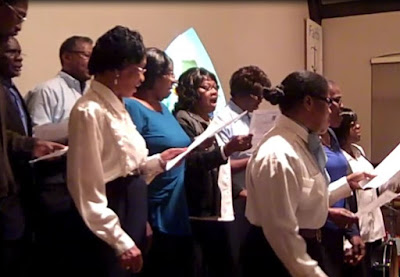
The assumption is that it’s best for a singer not to have lyrics or sheet music in their hands when performing. But is this necessarily a bad thing?
I teach songs from many different cultures, most of which aren’t in English.

Before I teach a song, I need to find out as much as I can about it: who wrote it, what language it’s in, its cultural context, translation into English and so on. Here’s how I go about it.
There are many different way of offering lyrics to singers, more so if your choir doesn’t use sheet music.

None of the options are perfect. Let’s look at the pros and cons of each.
How important is it that the words in songs mean something, or can they be meaningless sounds?

Many choirs sing songs in languages they don’t understand, so does it matter whether lyrics are in a real language?
When using songs from cultures different to ours, we have the responsibility to teach or perform them as accurately as we can.

We honour the song by being as authentic as possible when pronouncing the words, and reproducing the melody and harmonies.
Many songs get handed down by ear and labelled ‘traditional’ without any clear understanding of where they come from.

It’s important to honour the source of all songs and the cultures they originate from. Here’s a guide to the things that you need to consider.


A concert is looming and there are a couple of songs you don’t know that well.

You’ll need to put in some practice at home, but how do you rehearse on your own?