I’m often asked how to get singers “off book” for their next concert.
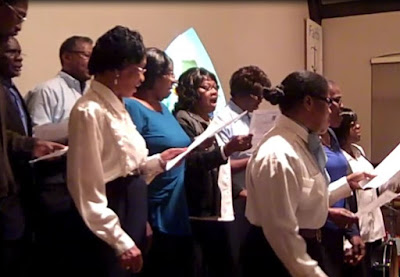
The assumption is that it’s best for a singer not to have lyrics or sheet music in their hands when performing. But is this necessarily a bad thing?

I’m often asked how to get singers “off book” for their next concert.
The assumption is that it’s best for a singer not to have lyrics or sheet music in their hands when performing. But is this necessarily a bad thing?
We often think of traditional songs from other cultures as just “out there” for the taking, to be used freely.
But every song was written by somebody, and every song is rooted in a particular culture and context. This hasn’t always been understood or acknowledged by those who have carried the songs into different contexts.


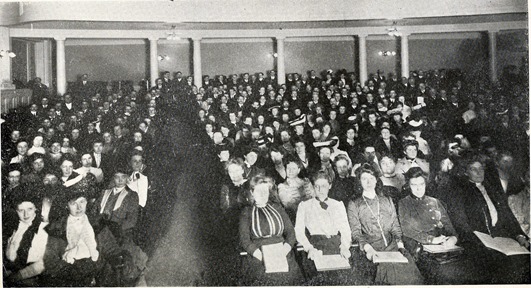
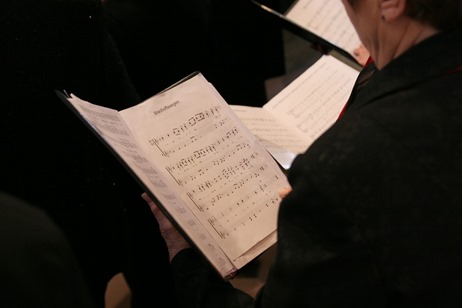


“In our choir we’re not allowed to use words in concerts.”

Great idea. In principle. But how do you achieve it?

Philippa writes:
“How do you respond when you get asked directly for sheet music? I’ve had this a few times now, usually by men interestingly! I’ve not had a woman ask me for dots yet, although when I first joined a community choir five years ago I was the person asking for music.
“I have managed to say no nicely until now, and explain my logic for not giving out music. I find it hard to refuse as I’m a people pleaser, but I totally agree that as a choir leader you can never please everyone and I’m not going to tie myself in knots trying to!”
I met a woman the other day who was interested in joining my choir, but it clashed with another choir she was in. She then said that if she had joined my choir she would have to have the music. Even if I didn't give it to her, she would write it down herself!
This woman is a control freak. She needs to be in control and hates that eggy place where you’re not quite sure what’s going on (see The importance of being confused). She has a method (sheet music) that she knows works and sticks to it. It’s her security blanket.
You need to point out to people that reading music is a learnt skill and is not necessary to be able to sing (see Music notation – do singers need it?). It’s an invention, an aide memoire originally developed to help those learning hundreds of chants (easy to get lost with them!). The vast majority of the world’s singers do not read music, neither is most of the world’s music written down.
People need to trust the learning process (it takes longer than they think) and not expect instant results. We have become a visual culture, so need to re-learn how to LISTEN. See Learning songs by ear.
So ... I don’t hand out written music to teach songs. I use it myself to remind me of parts because I have 600 songs in my repertoire and am not good at remembering all of them! Once we have learnt a song and sung it for a few months, I might hand out music if someone asks so they can play it at home on the piano or pass it onto someone else. But only if they know it perfectly by ear first.
I make it very clear that my groups do not use sheet music. There are plenty of choirs out there who do, so they can go and join one of those if they want.
Men often request sheet music because bass parts are usually very hard to remember as they often don’t have a recognisable tune. In fact, many of my basses invent their own music notation for just that purpose. But if you teach them to listen to the chord changes, then they will soon know when to go up and down.
You can’t please all the people all the time. Be assertive and clear about what you offer. There are plenty of other choirs that people can join.
Last week I looked at what music notation is for and if you need it to sing.

This week I’d like to lay out what I think are the benefits and shortfalls of using sheet music to teach and learn songs.
Is there anything I’ve left out? Do leave a comment. If you’re reading this by email or in an RSS reader, you should find a ‘comment’ link at the bottom that you can click on.
Do you have to be able to read music to sing? Lots of people believe so and are put off joining choirs as a result.

I don’t use written music when I teach, but does that mean I am limited in what I can teach? And am I making life difficult for those who can read music?
I want to make music as widely accessible as possible, so I don’t use unnecessary musical jargon or rely on sheet music. All the groups and workshops I run are open-access in the sense that everyone is welcome and no experience is necessary.
My argument is that the vast majority of the world’s folk or traditional music has never been written down and it is learnt by ear in the cultures that it originates from. And that is my repertoire.
I don’t use written music when I teach. I teach by ear, singing each part in turn and getting people to sing back until they’ve got it. This is partly due to the fact that a lot of the repertoire I teach comes from cultures where songs are passed down orally from generation to generation.
Of course, what I do is artificial. If you came from the same culture as the song you would have heard it repeatedly since you were a baby. Gradually you would have become more familiar with it until you knew it off by heart. At no point would you have seen either the music or the lyrics written down. You would have learnt everything by listening.
Trying to replicate that in a choir or singing workshop is fairly ridiculous as we’re trying to short-circuit years and years of repetition. But we try, and after a few weeks it’s surprising how much has gone in. More importantly, people retain it for a long time. All without seeing anything written down. (OK, maybe I do put the lyrics on the wall from time to time, but it’s not our native language!)
So what do we need music notation for? (Liz Garnett has also written on this subject recently: On Musical Literacy)
There are forms of music notation dating back to Ancient Greece and before. These simple ways of describing music visually consisted of symbols representing relative pitch and note duration. The original urge to notate music was probably for several reasons:
In 8th Century Europe, monks in monasteries regularly used symbols (known as neumes) to put plainchants down on paper. Because the notation couldn’t express exact timing or absolute pitch, the parchments served mainly as a reminder to those who already knew a tune. They were not that useful to people learning a new tune if they had never heard it before.
Gradually systems of music notation became more sophisticated until we arrive at the five-staff system that most people are familiar with today. This system originated in European classical music, but is not the only system around. There are other forms of notation in, for example, India, China and Indonesia, as well as alternative Western notation systems (such as Solfège) and graphic and pictorial forms invented for specific experimental compositions.
In many of the choirs that I have run, the basses often invent their own notation, a version of early neume-based notations. The length of a horizontal line reflects the length of a note, and the vertical distance between lines shows the relative pitch. Like early Western notation, this is just an aid to memory and can’t be used to learn a song from scratch. The basses tend to invent it because bass parts often don’t have a recognisable tune so they need to know where notes go up and down and how long they stay on it (rather like plainchant).
Since music notation has evolved and can now express complex rhythms, absolute pitch, and accurate note duration, it can be used as a tool for learning and not just an aid to memorising a song already learnt. It was also a useful means by which music could be disseminated over long distances before the advent of recording devices.
It is important to remember that much of the world’s music is not written down. The vast majority of music in the world is traditional or folk music which is transmitted orally. When early song-collectors (usually Westerners trained in music theory and notation) arrived they would have to notate what they heard because they had no recording devices.
However, not only is it very difficult for Western notation to cope with complex rhythms, microtones, unusual scales or modes, but the song-collectors would often ‘edit’ what they were notating to fit in with preconceived notions of ‘proper’ musical structure. Sometimes a harmony would appear ‘wrong’ or each verse might have a different rhythmic structure which would get simplified when notated, or a tricky rhythm might be mis-heard. Also, since these songs came from living traditions, the song might be entirely different depending on which day of the week it was collected or who was singing it!
The vast majority of notated music is composed by a known individual (rather than being created by ‘Anon’ and handed down over generations) and of Western origin. This gives a very distorted picture of the world’s music if we only pay attention to written scores.
Rather like when the bible was only available in Latin, the fact that you have to learn to read music means that it is easy for an elite to arise. Those who could read and write music became musical gate-keepers who decided what people could hear and what music got passed on. Inevitably it became a class issue.
The middle classes, who wanted to behave and sound different from the ‘rough’ working classes, promoted the idea that ‘proper music’ (i.e. notated) was ‘high art’ and anything folk or traditional was somehow less worthy. Because traditional music was passed on orally and not written down, it didn’t count.
Andrew Emmet has written in a comment on this blog:
“We have a lot in common, but I know one of our differences is that you choose not to have written music available. To me this is like reading a story to someone, but never teaching them to read.”
The implication in Andrew’s comment is that only music ‘literature’ counts. Only stories (or songs) written down in books are worth reading or singing. Stories and songs passed on through the oral tradition don’t count.
But the oral tradition is a living tradition. Books are fixed and set in time. Sheet music is like an insect in amber. There is no longer scope for change, embellishment, or additions.
Reading a book is one experience as is watching a movie. But seeing a live theatre production or hearing a great storyteller is something else. There is room for both, but one is not less than the other. It is, of course, possible to sing without being able to read music.
It is impossible to notate a song accurately whether it is a written version of a song heard ‘in the wild’ or the score created by a composer. If it were possible, then there would be just one, perfect, canonical performance of every song or piece of music in the world.
However, some people believe that the written score somehow represents a Platonic ideal that we strive to achieve. But we can never know exactly what the composer intended, or whether the piece of music we have in our hand is an accurate representation of the song it is notating.
Next week I’ll consider the pros and cons of using sheet music, and in a later post I’ll consider what to do in a ‘learn by ear’ choir if someone insists on having the written score.
In the meantime, do let me know what your attitude is to sheet music. Do you use it? Do you find it useful or does it have its drawbacks? What kind of repertoire do you sing? Do you use an alternative system to the popular five-staff system? Do drop by and leave a comment.
Recently I wrote about an artist who thought that music resides in the musical notation.

I disagree completely – the sheet music is not the song!
I ran a workshop recently where I taught songs from across Eastern Europe. Many of the songs are from traditions stretching back hundreds, if not thousands, of years and have been handed down orally from one generation to the next. Inevitably changes happen over time:
Songs are living entities which mutate and develop over time, never becoming stale or fixed.
At the end of the workshop – as is always the case – somebody came up to me and asked for the sheet music. She had learnt the song perfectly, but somehow thought that encoded in the dots she would find the real song, the proper and exact version.
Then there are the people who ask what the song means as soon as I start teaching it. “Difficult to say” I answer “it’s in a rather obscure Croatian dialect and in any case it’s full of poetic symbolism which doesn’t make sense in our culture.”
If only they had the exact, correct words, a decent translation, and the printed sheet music, everything would be OK. The song would become real in some sense, and they would have the definitive version.
It’s like trying to stop the sand shifting, or trying to freeze the waves. You can’t capture a living tradition.
If only these people understood that the sheet music is just an aide memoire. A feeble attempt to jot down what somebody heard at one particular time in one specific place. If they went back the next day, it would probably be different. (I have the score of a wonderful South African song which says that it was notated on a particular day from the singing of a particular woman – the implication being that if it had been a different singer on a different day, the score would have been different.)
The sheet music version of a song will inevitably be very different from the song as heard in the wild. Not only will the song change each time, but trying to notate the exact twiddles, tempo changes and microtones is impossible. We also unconsciously (or even consciously sometimes – stand up Cecil Sharp and Ralph Vaughan Williams!) impose our own culture and understanding of music when we notate.
We hear what we imagine to be a ‘bum note’ and automatically correct it. We don’t like (or understand or even perceive) the complex 11/8 rhythm and end up notating it as 3/4 or 4/4. The harmonies seem strange to our ears so we ‘correct’ them. The subtle and unusual vowel sounds of the foreign language are edited out and approximated to sounds that we are more familiar with.
Even with composed songs (i.e. those which were created by one individual and notated) the sheet music will never tell the whole story. The composer aims to notate what she hears in her head in all its subtlety and complexity. But musical notation can never, ever exactly replicate what the composer intended.
No amount of comments, instructions, grace notes or note markings will ever accurately capture their intentions. There will always be scope for misunderstanding, ambiguity and interpretation. Otherwise we would get really bored with endless performances of the same piece of music. If truly accurately notated it would sound exactly the same each time.
Music-making is an aural activity and not a visual one. Don’t ever mistake the sheet music for the song!